Thelma and Louise's death defiance of Patriarchal Rule
OR
The Roman Legacy
Myth of State
Annihilation of rebellious or haughty individuals is inevitable when civilization is at stake, regardless of our personal sympathies.
Perhaps you have read the ancient Greek story of war called The Iliad (750 B.C.E.) Homer does not portray Aeneas as a great Trojan hero like Hector, but Poseidon does predict that he will eventually rule over the Trojans. With his father and son, Ascanius, and a handful of Trojan survivors, Aeneas leads the flight from the burning ruins of Troy. The Roman poet Virgil transforms this legend into a political epic, linking Roman origins and Agustus himself, with the Age of Heroes and the divine ancestry of Troy. Virgil mimics Homer's two epic poems; yet The Aeneid is permeated with patriotic values, most strikingly a devotion to duty. Virgil retells Homer's stories but modifies the ideological implications to shape and define Roman distaste for sagas of individualism--the absolute sovereignty of the State is the paramount message. The Greek hero, driven by his own ego and his own notions of self-gratification, establishes the dictum, "know thyself." For the Romans, the Greeks were too likely to commit reckless and antisocial acts; in general the Greek hero was too prone to all kinds of excessive behaviors, including the Trickster myth of the Trojan Horse.
The following provides one example of how Virgil reconfigures Homer's epic characters for the purpose of advocating loyalty and duty to the State. In the Odyssey,Odysseus' shipmate Elpenor gets drunk, falls off Circe's roof, and breaks his neck. His shade wings off to the underworld. Oddly enough no one seems to notice he is missing. Odysseus later discovers Elpenor's shade in the underworld. By code, he promises Elpenor he will return to the island of Circe and give him a proper burial.
In The Aeneid, we have the same narrative situation. Aeneas enters the underworld and encounters the shade of his former helmsman Palinurus. Aeneas also promises to give Palinurus a proper burial, but the difference between these two helmsmen exposes Virgil's intention of redefining heroic immortality or fame. Palinurus, it seems, dies at the hands of the Italians after being swept overboard during a storm with the ship's tiller in his hands. As helmsman, his concern for his own life is secondary to the duty he feels for Aeneas' ship and crew: "I swear by those harsh seas that no fear which gripped me on my own behalf was so strong as the other fear, that your ship, robbed of her steering gear, and wrested from her helmsman's hand, might founder. . . ." Virgil transforms the hedonistic Elpenor into a duty-bound soldier of the State. Virgil's characters sanctify Rome's destiny to conquer and rule, and emphasize duty as the quintessential quality of heroic behavior.
Yet Duty does not come easily. In Book IV of The Aeneid when Queen Dido of Carthage confronts Aeneas about his plan to abandon her, he replies that he has no choice and must go to Italy. On the surface, Aeneas appears to sacrifice his one true love for the noble empirical cause of the State. Still, the love affair between Dido and Aeneas is difficult to summarize. While enlisting sympathy for the Carthaginian Queen, Virgil gives us a shabby portrayal of Aeneas sneaking, almost without nerve, out to the fleet to get away from Dido and his romantic involvements. In fact, some readers may feel that Dido is a great deal more likable than duty-bound Aeneas, because of her genuine or authentic portrayal of human passion and risk. But this is the point! In a world where the Myth of State has dominion, we may find ourselves loving and identifying with colorful and charismatic individuals, but ultimately such love affairs and sympathies are shown to be misguided.Bottom line: Annihilation of rebellious individuals is inevitable when civilization is at stake, regardless of personal sympathies. This is the Roman saga. This is the narrative of the Myth of State in all mythologies.
For example the following we hit movies in my younger days. These are the tales of law and its transgression.
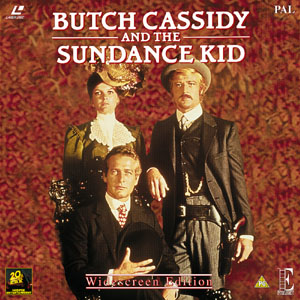
In Hollywood mythopoeia, filmmakers play out the drama between the individual and civilization, between Myth of Self and Myth of State, in films like Thelma and Louise (1991), Butch Cassidy and the Sundance Kid (1969), and Bonnie and Clyde (movie in 1967, TV mini Series 2013). We will undoubtedly cheer for these characters and identify with the freedom they come to represent; we sympathize with their actions and situations--but in the end these heroes cannot stand against the ultimate power and authority of the State. In these films above, the heroes are brutally "brought low" more or less by the agents of government. Hence, ancient archetypes in the Myth of State remind us of the futility of individual agendas, the futility of investing emotional energy into the illusion of rebellion; the ultimate goal is the triumph of law and order! Just as in Freud's Civilization and its Discontents, these are the fundamental principles of eternal civilization and the Myth of State.
NOTE: Paul Newman plays characters like Cassidy and Cool Hand Luke (highly recommended, 1967), who aptly symbolize an individual's rebellion against all forms of law--the best of mythology of self. But again most of these characters suffer a kind of agony that reiterates the futility of individual rebellion against absolute power and authority. Still, as we see in our study of Myth of Self, more notorious cases of mythology lead to the marriage of rebellion and civilization. Sometimes rebellion works as in the story of Rosa Parks. The Myth of Self insists that death or imprisonment is preferable to a loss of liberty, i.e. Antigone. This notorious idea is of course immortalized in Patrick Henry's Speech on March 23, 1775.